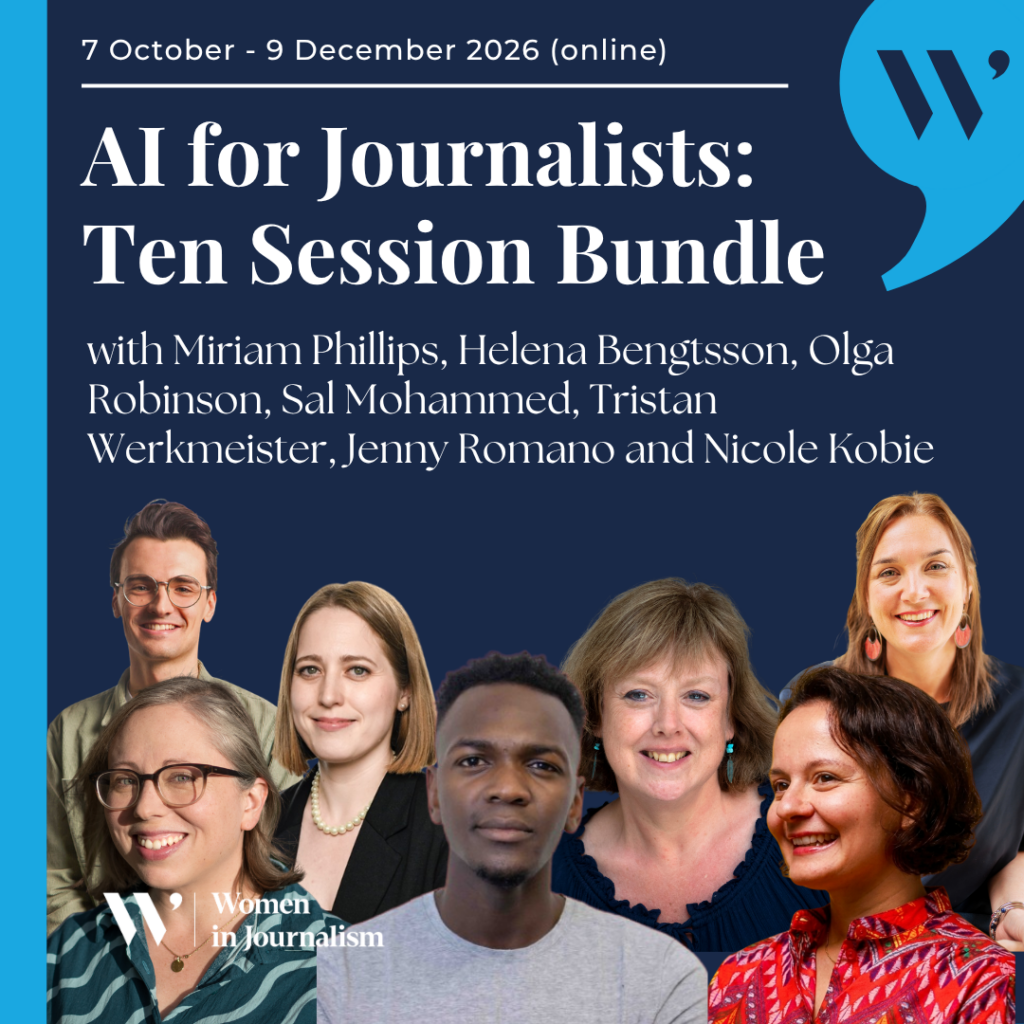
We’re launching a ten-part AI for Journalists: Practical Skills for Better Reporting, taught entirely by working journalists. Whether you’ve been meaning to get started with AI and aren’t sure where to begin, or you’ve been using it for a while but feel like you’re only scratching the surface, this course is for you.
Over ten lunchtime sessions we’ll cover everything from finding better stories and researching documents to verification, AI agents, social media, APIs and the ethical questions every newsroom is now facing. You’ll learn from journalists at Newsquest, Reuters, BBC Verify, The Newsroom and more, all sharing the techniques they use in their own reporting.
By the end you’ll know which AI tools are genuinely worth your time, how other journalists are using them in their reporting, and where they can help you work faster without compromising accuracy.
When: Every Wednesday lunchtime 12.30pm-1.30pm from October 7 until December 9.
Where: Online via Zoom
Watch back: All sessions are recorded. Ticket holders will receive a recording after the event along with any accompanying slides and notes provided by the session leader.
Pricing
This bundle is £80 for WiJ members and £160 for non-members.
If you’re not already a member, Women in Journalism membership costs £45 a year and includes discounted event tickets, access to exclusive events, mentoring opportunities and invitations to our annual parties. You can find out more here.
AI for Journalists: Practical Skills for Better Reporting
Week 1: Understand AI with Miriam Phillips
Wednesday 7 October, 12.30pm – 1.30pm
This practical introduction with Miriam Phillips will help you build confidence and understand how AI can support your reporting without replacing your editorial judgement.
During the session you’ll learn:
- Which AI tools are best for different newsroom tasks
- What other newsrooms are doing globally
- How to write better prompts and get more reliable results
- How to use AI to assist building your story but keep your tone of voice
- Where AI makes mistakes and how to fact-check its output
Week 2: Find Better Stories with Miriam Phillips
Wednesday 14 October, 12.30pm – 1.30pm
AI can help you generate stronger story ideas, uncover fresh angles and spot opportunities you might otherwise miss. In this session you will learn how to use it as a reporting partner to produce more original journalism.
During the session you’ll learn:
- How to generate original story ideas and follow-ups
- Ways to identify local angles and exclusive opportunities
- How to set up briefings to proactively bring in updates from your patch/expertise
- Assist with your editorial forward planning
-
Techniques for turning one news event into multiple stories
Week 3: Research Faster with Helena Bengtsson
Wednesday 21 October, 12.30pm – 1.30pm
In this session, Helena Bengtsson will show you how to use NotebookLM and Pinpoint to organise information, uncover key facts and support you when working on stories with lots of documents or data.
During the session you’ll learn:
- How to set up and use NotebookLM and Pinpoint effectively
- Practical ways to work with court documents, FOI responses, annual reports and other large document sets
- Real examples of how journalists are using these tools in their reporting
Week 4: Verify Information
Wednesday 28 October, 12.30pm – 1.30pm
In this practical session, BBC Verify Assistant Editor Olga Robinson will show you how AI is transforming the way journalists investigate and verify images, videos and online content, helping you determine what is real and what has been manipulated.
During the session you’ll learn:
- How to use AI to investigate images, videos and online claims, from checking historical weather conditions to verify videos to analysing large sets of documents at scale
- How to identify AI-generated or manipulated images, video and audio, and understand the limitations of current detection tools
- Practical verification techniques used by journalists every day, from breaking news to major investigations
Week 5: Change the Way You Work
Wednesday 4 November, 12.30pm – 1,30pm
In this practical session, former Googler Sal Mohammed will explain APIs in plain English and show you how to connect AI with services like Google Drive, Gmail and Monday.com to streamline your reporting workflow.
During the session you’ll learn:
- What APIs are, how they work, and why journalists don’t need to be programmers to use them
- How to connect AI with Google Drive and Gmail to help manage research, interviews and large-scale outreach
- How to use tools like Monday.com to organise investigations, track contacts and manage reporting projects more efficiently
Week 6: Reach Bigger Audiences
Wednesday 11 November, 12.30pm – 1.30pm
In this hands-on session, Tristan Werkmeister from Reuters will show you how to use AI to adapt stories across platforms, write hooks that stop the scroll, and speed up your social publishing workflow without cutting corners editorially.
During the session you’ll learn:
- How to use AI to reformat a single story into platform-specific versions (TikTok, Instagram, X and LinkedIn) without losing accuracy
- A practical framework for writing AI-assisted hooks and captions that drive engagement, built on hook-writing techniques taught at CUNY and the University of Montreal
- AI workflows for speeding up caption writing, subtitling and thumbnail selection while keeping editorial standards intact
Week 7: Write Once Publish Everywhere
Wednesday 18 November, 12.30pm – 1.30pm
In this session, Miriam Phillips will show you how AI can help you adapt your journalism for different platforms and audiences without compromising quality or accuracy.
During the session you’ll learn:
-
How to repurpose stories for newsletters, websites and explainers
-
Ways to tailor copy for different audiences and platforms
-
How to save time while maintaining your own voice
Week 8: Automate Repetitive Work
Wednesday 25 November, 12.30pm – 1.30pm
In this session, Jenny Romano will explain how AI agents work – including the difference between true agents and agentic systems – and show you practical automations that can save journalists hours every week.
During the session you’ll learn:
- What AI agents are, how they differ from agentic systems, and when they’re more useful than a chatbot
- How to automate repetitive newsroom tasks using AI
- Real examples of AI workflows you can adapt for your own reporting
Week 9: Use AI Responsibly
Wednesday 2 December, 12.30pm – 1.30pm
Nicole Kobie will share practical guidance on using AI safely, ethically and transparently, helping you make informed decisions in your reporting.
During the session you’ll learn:
- How to recognise the limitations and risks of AI tools
- The legal and ethical issues surrounding AI-generated content
- Practical guidelines for using AI while protecting accuracy, accountability and audience trust
Week 10: What’s Next?
Wednesday 9 December, 12.30pm – 1.30pm
AI is changing journalism at an extraordinary pace. In our final session, hear from leading journalists about how AI is reshaping reporting, the skills newsrooms are looking for and what they think every journalist should be learning next.
During the session you’ll learn:
- How AI is reshaping reporting
- The skills newsrooms are looking for
- What every journalist should be learning next